
Replacement, widening & aprons
Concrete Driveways in Omaha, NE
The right base, thickness and joints for a driveway that faces snow, salt and steep grades.
- Free on-site measuring visit
- Written, line-by-line quote before any work
- Air-entrained concrete on a compacted base for outdoor slabs
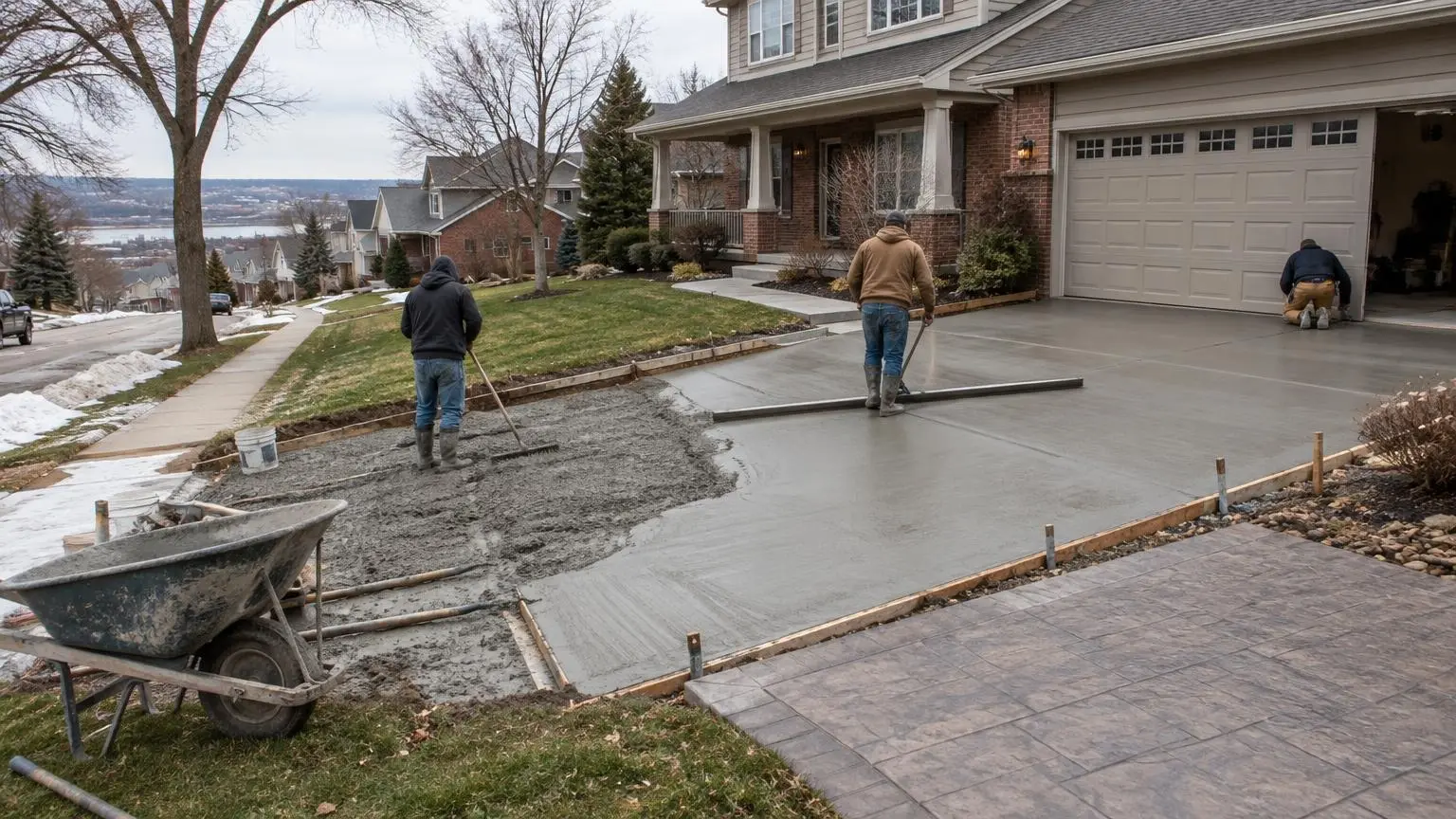
A New Driveway, Built From the Ground Up
Concrete driveways in Omaha take more punishment than any other slab on the lot. Every winter day, tires carry in brine, shovels and plow blades scrape the surface, and snowmelt runs down the slope and refreezes at night. On a sloped lot, that water heads straight for the low end of the drive, which is often the garage. The same spots tend to fail first: the apron by the street where salty slush sits, the panel next to the garage floor, and any edge where water can get under the slab.
Signs it is time to replace
- Flaking or pitting across a large part of the surface
- Cracks wide enough to fit a coin, or cracks where one side sits higher than the other
- A panel by the garage that has sunk and now holds water at the door
- Water running toward the house instead of away from it
- A broken apron or crumbling edges along the lawn
- A drive that is too narrow for the cars you have now
One sunken panel on an otherwise solid driveway can often be lifted, and a light surface problem can be resurfaced. When settling, wide cracks and scaling all show up together, replacing the driveway usually costs less over the next ten years than patching it every spring.
What goes under the concrete
Most driveway failures start below the surface. We break out the old concrete or asphalt, dig out soft or organic soil, and replace it with crushed rock compacted in layers. That gives the slab even support and lets water drain away rather than freezing under it. Forms are set so the finished surface sheds water toward the street, not toward the garage or foundation.
Thickness depends on use. HomeGuide's driveway guide calls for at least 4 inches for regular cars, 5 to 6 inches for RVs or heavy vehicles, and thicker edges of 6 to 8 inches. If a pickup with a plow, a trailer or a camper lives on the driveway, we add depth where it parks. Air-entrained concrete is the main defense against freeze-thaw damage, and rebar or wire mesh in the middle of the slab keeps cracked sections from separating.
Where the driveway meets the street
Many Omaha driveways cross a public sidewalk and end at an approach cut into the curb. That strip is in the public right-of-way. KMTV reported in 2024 that the city sent owners letters giving them 30 days to repair a damaged driveway approach. If you have a letter, or if the approach is in rough shape anyway, we measure it separately and put it on its own line, so you can see what is public work and what is your private driveway. We confirm what permit, if any, your address needs before the job is scheduled.
Picking a surface
A plain broom texture is still the right answer for most Omaha driveways: the shallow grooves give tires and boots something to grip in slush, and it shovels easily. Exposed aggregate, where the top paste is rinsed off to show the stone, is a good upgrade if you want more texture and a surface that hides tire marks and drips. Some owners add a stamped or tinted border along each side and leave the wheel lanes plain. We steer away from a slick, hard-troweled finish on any driveway with a grade, because it turns into a sheet of glass after freezing rain.
Your new driveway's first year
Give it a full week before any car rolls onto it, and longer for anything heavy. For the first winter, put down sand instead of salt. In later years, read de-icer labels and skip anything containing ammonium nitrate or ammonium sulfate, since those chemically attack concrete. HomeGuide advises a 28 to 30 day wait before the first sealer coat, then resealing every 2 to 3 years. Check that downspouts empty onto the lawn rather than the slab, and if a service plows your drive, ask them to run the blade a little high.
What the Driveway Price Covers
Each of these is a separate line on the quote.
Tear-out and hauling
Old concrete, asphalt or pavers broken out and removed, plus soft soil below.
Rock base
Crushed rock placed and compacted in layers for firm, well-drained support.
Grade and forms
Forms set so water runs away from the garage and house.
Reinforcement
Rebar or wire mesh set mid-slab, matched to the size and load.
Pour and joints
Air-entrained concrete placed, broom finished and jointed on a planned layout.
Aprons and pads
Approaches, wider entries and side parking pads tied into the drive.
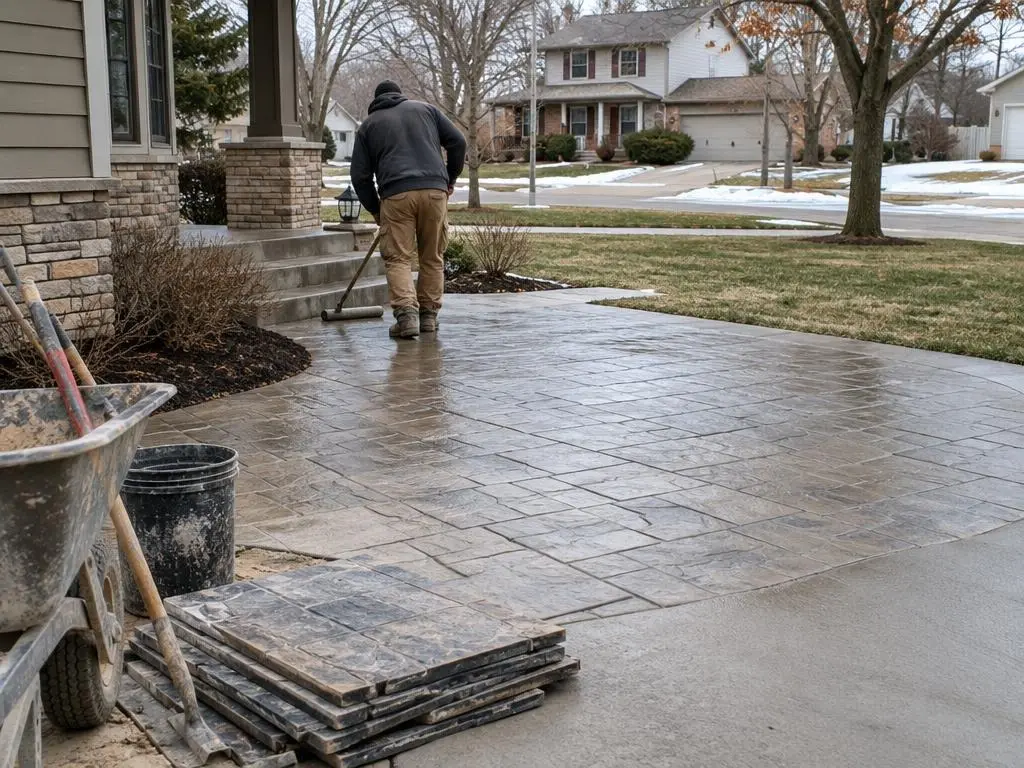
Typical Concrete Driveway Costs
| Item | Published range |
|---|---|
| Standard driveway, per sq ft installed | $6 to $10 |
| One-car, 12 x 24 ft | $1,700 to $4,300 |
| Two-car, 20 x 20 ft | $2,400 to $6,000 |
| Two-car, 24 x 24 ft | $3,500 to $8,600 |
| Three-car, 24 x 36 ft | $5,200 to $13,000 |
| Old driveway removal, per sq ft | $2 to $6 |
| Rebar reinforcement, per sq ft | $1 to $3 |
Figures from HomeGuide's concrete driveway cost guide (national averages, not Omaha quotes). Local prices run higher or lower, and tear-out, access, grade, thickness and finish all move the total. The written estimate after we measure is the price.
Start to Finish
1. Measure
We measure, check drainage and the approach, and write the quote.
2. Tear out and base
Old surface removed, soft soil dug out, rock compacted.
3. Pour
Forms, reinforcement, air-entrained concrete, broom finish and joints.
4. Cure and hand off
The slab cures and you get written dates for walking, parking and sealing.
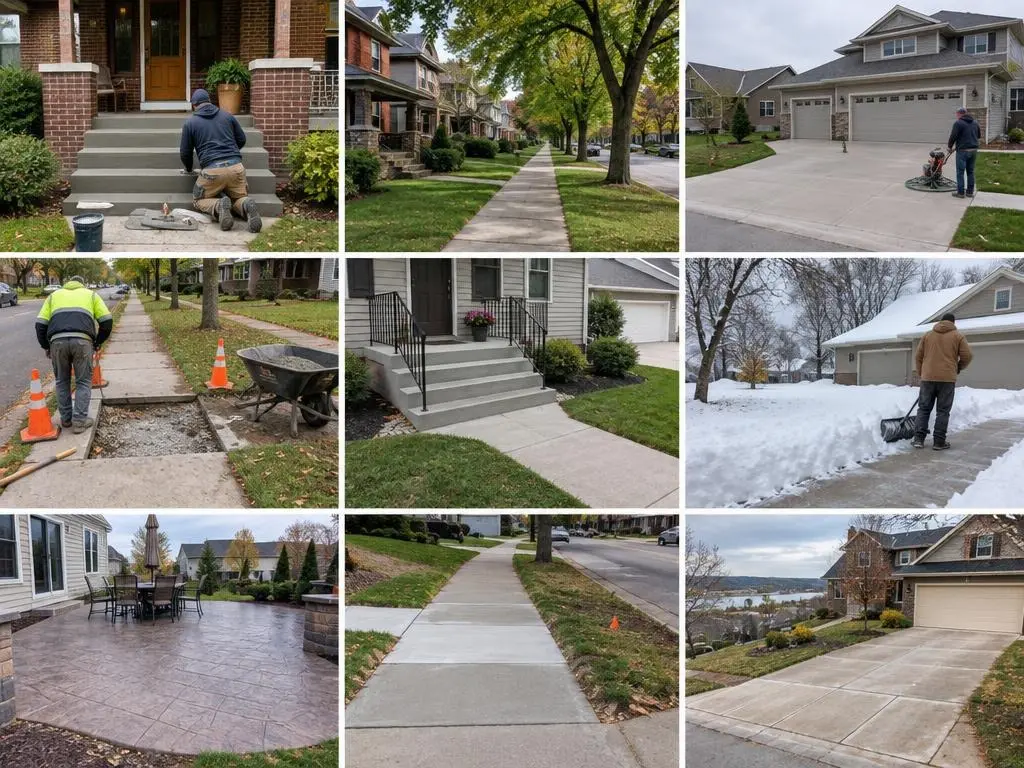
Why Choose Us for Concrete Driveways
Sized to your vehicles
Extra thickness where trucks, trailers or campers park.
Public and private separated
Approach and public sidewalk work priced on their own lines.
Concrete Driveways Questions
How long does a concrete driveway last?
HomeGuide's guide says a properly installed driveway lasts up to 30 years with basic maintenance, and 40 years or more with premium materials and careful upkeep. In Omaha, the base, the air content of the mix, regular sealing and what de-icer you use decide where in that range yours ends up.
How thick should my driveway be?
HomeGuide puts the minimum at 4 inches for cars and 5 to 6 inches for RVs and heavy vehicles, with thicker edges. We also add depth at the apron, where turning tires and plows concentrate the load.
Can you pour new concrete over my old driveway?
We rarely recommend it. New concrete over a cracked, sunken driveway inherits the same cracks and settling, and it raises the surface at the garage door and the street. Tearing out the old slab and fixing the base is the reliable way.
Does driveway replacement in Omaha need a permit?
Work in the public right-of-way, such as the approach and the sidewalk across your driveway, is the city's concern. We confirm what your address needs before scheduling and include it in the plan.
When can I park on it?
HomeGuide says to wait at least seven days for cars and about 30 days for heavy vehicles. We give you exact dates for your slab.
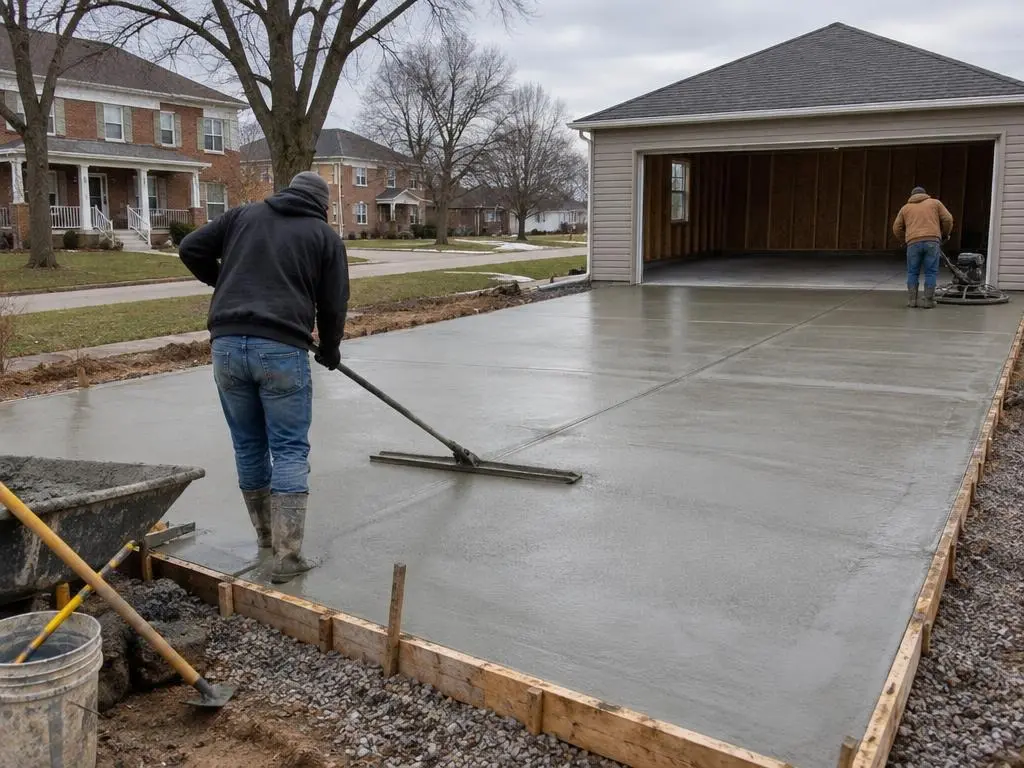
Concrete Driveways Service Areas
- Concrete Contractors in Omaha, NE
- Concrete Contractors in Millard, NE
- Concrete Contractors in Bellevue, NE
- Concrete Contractors in Papillion, NE
- Concrete Contractors in La Vista, NE
- Concrete Contractors in Ralston, NE
- Concrete Contractors in Gretna, NE
- Concrete Contractors in Elkhorn, NE
- Concrete Contractors in Valley, NE
- Concrete Contractors in Waterloo, NE
- Concrete Contractors in Springfield, NE
- Concrete Contractors in Council Bluffs, IA
- Concrete Contractors in Carter Lake, IA
- Concrete Contractors in Glenwood, IA
- Concrete Contractors in Crescent, IA
- Concrete Contractors in Blair, NE
- Concrete Contractors in Fort Calhoun, NE
- Concrete Contractors in Plattsmouth, NE
- Concrete Contractors in Missouri Valley, IA
- Concrete Contractors in Ashland, NE
- Concrete Contractors in Bennington, NE
- Concrete Contractors in Louisville, NE
- Concrete Contractors in Treynor, IA
Get a Concrete Driveways Estimate
We measure your driveway and price it in writing, anywhere in the Omaha metro.